
Health-focused management
Based on the belief that maintaining and improving the health of our employees is an investment in future profitability, from a company standpoint we published our Statement on Health in 2017 and are proactively promoting strategic Health-focused management.
1.Statement on Health
We recognize that the health of our employees is essential to realizing the Yakult philosophy of “contributing to the health and happiness of people,” and therefore strive to create safe work environments that offer peace of mind, as well as promote good physical and mental health in our employees.
Hiroshi Narita
President and Representative Director
2.Health-focused management promotion system
In the promotion of Health-focused management, the company President serves as Chief Health Officer, while the General Manager of the Administrative Division and Director of Human Resources serve as Health Promotion Managers. To oversee implementation, we have also established a Health-focused management Promotion Section within the Human Resources Department that collaborates with the Yakult Health Insurance Association to promote individual measures.

3.Issues in Health-focused management
Based on our Statement on Health, we regard elevating employee productivity and continued dynamism of the Group as the most important themes in Health-focused management, which we are promoting in accordance with the following strategic roadmap.

Health Management Strategy Map
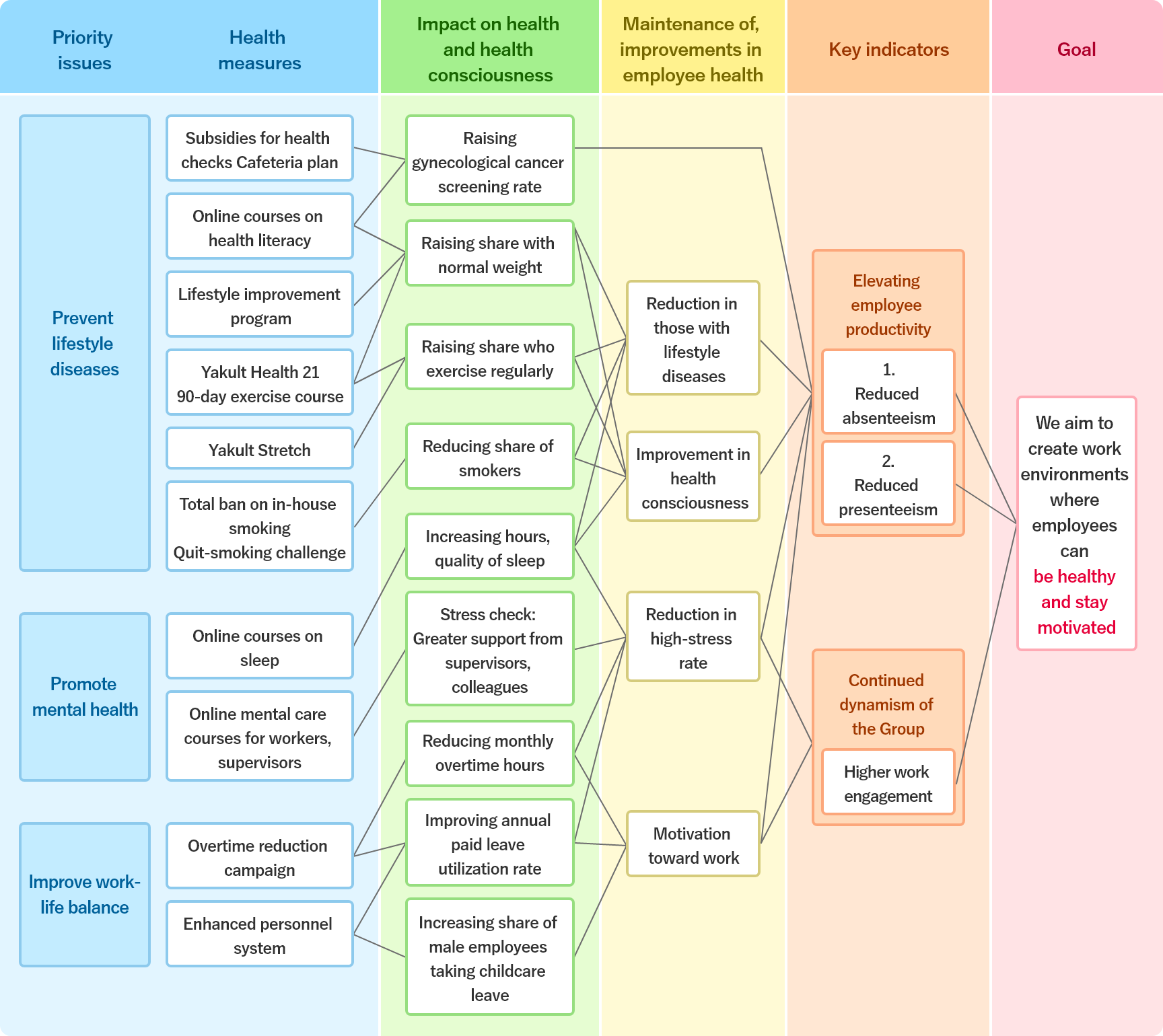
4.Main health measures
We conduct an in-house health survey of all employees to identify health issues.
Among the key indicators are absenteeism, presenteeism and work engagement.
| Main Initiatives | Start year | Purpose | Participants |
|---|---|---|---|
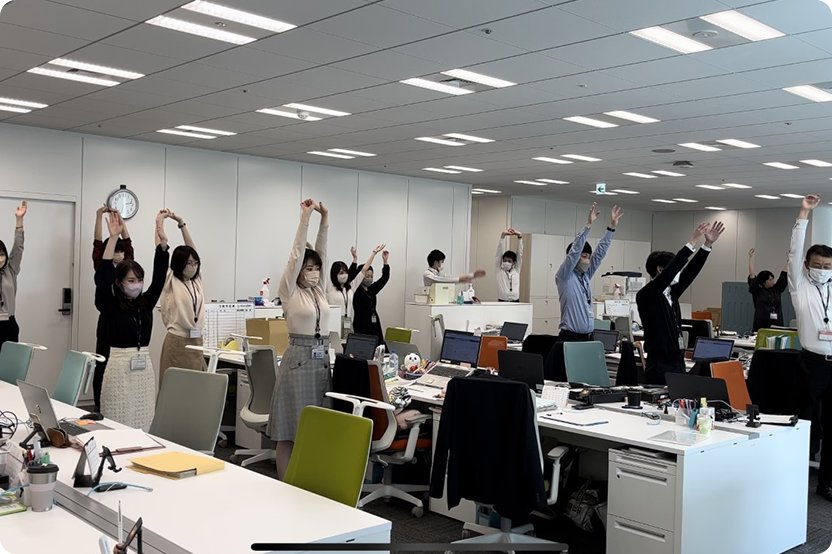
| Yakult Stretch | November 2020 | To reduce physical strain on employees—such as stiff shoulders, lower back pain, and eye fatigue—and to promote refreshment, we conduct the original “Yakult Stretch” exercises every day.
|
1,826 employees (FY2025) |
| Online Health Seminars Investment: 550,000 yen (FY2024) |
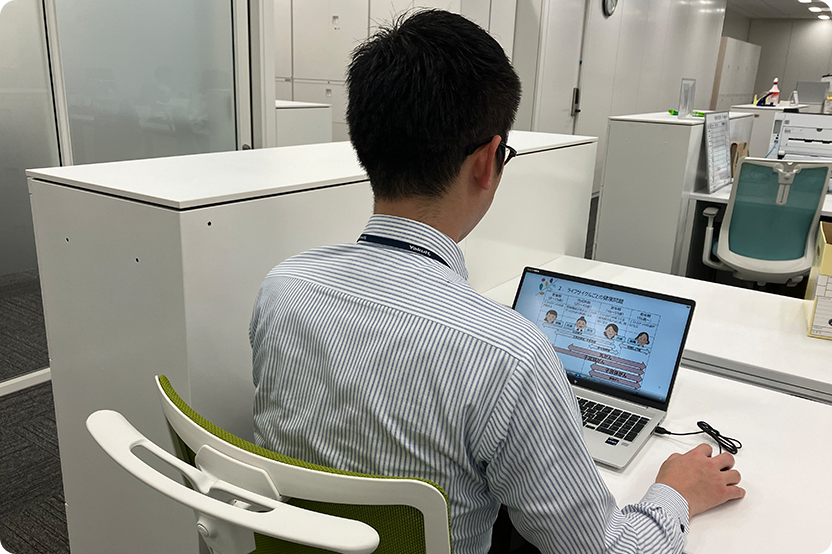
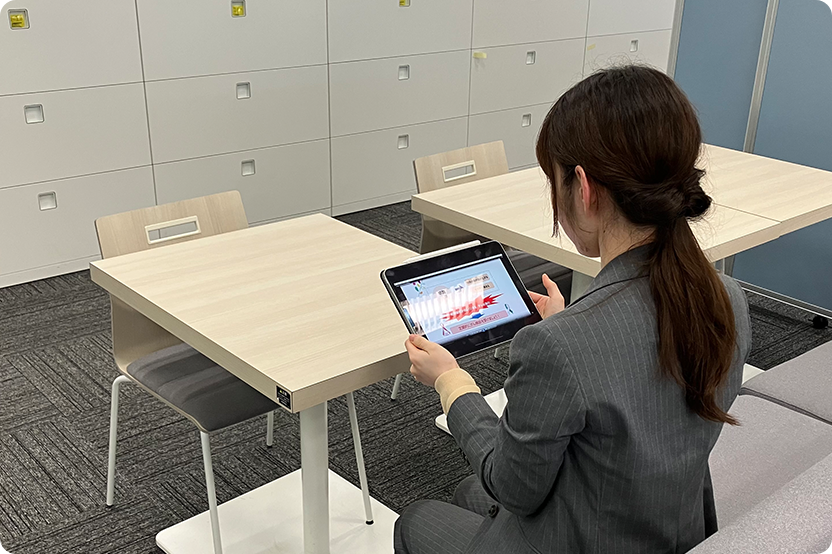
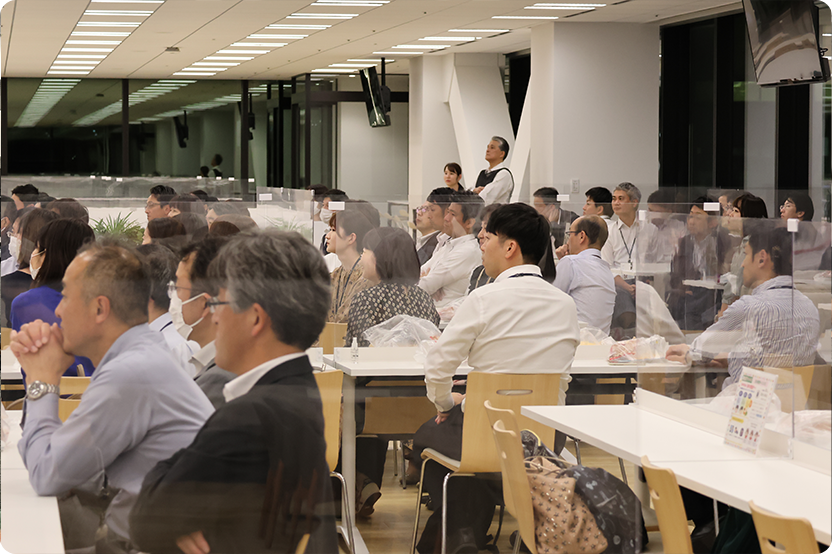
FY2021 | We provide online health seminars that employees can watch regardless of work location or work style. These programs aim to improve health awareness and literacy and encourage positive behavioral changes.
|
2,850 employees (FY2024) |
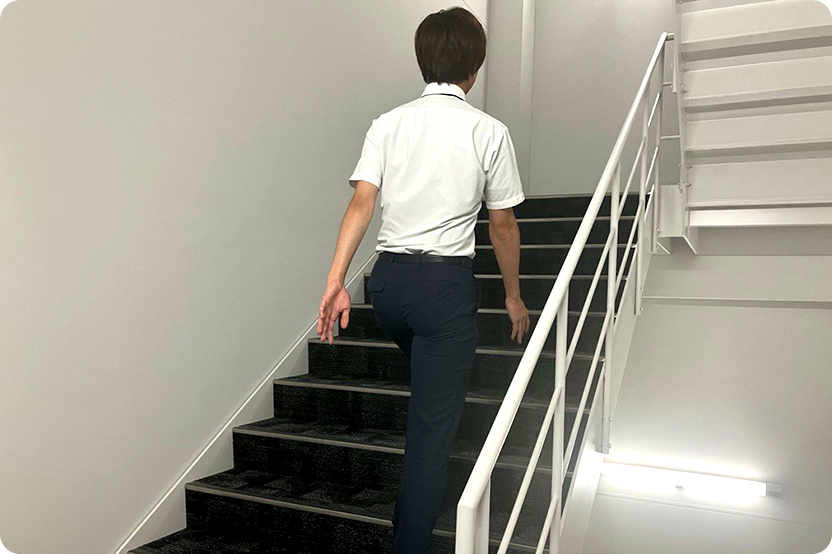
| Yakult Health 21 | 2001 | This program is implemented by the Yakult Health Insurance Society to prevent and improve lifestyle-related diseases. Our company promotes awareness of the program and encourages employees to participate in health activities. Employees select a course (exercise or diet) and work toward their goals. Example (exercise course): Walk 10,000 steps or 5,000 steps per day.
|
2,680 employees (FY2024) |
| Cancer Screening for Women |
|
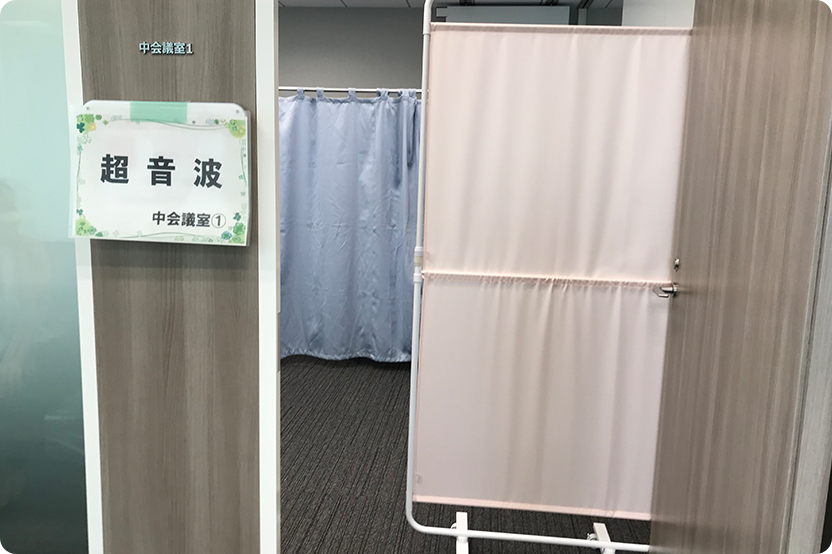
Breast and cervical cancers pose higher risks for working-age women, and prevention and early detection are essential. We promote an environment where female employees can easily undergo screenings during working hours, supporting their ability to work healthily and with vitality.
|
|
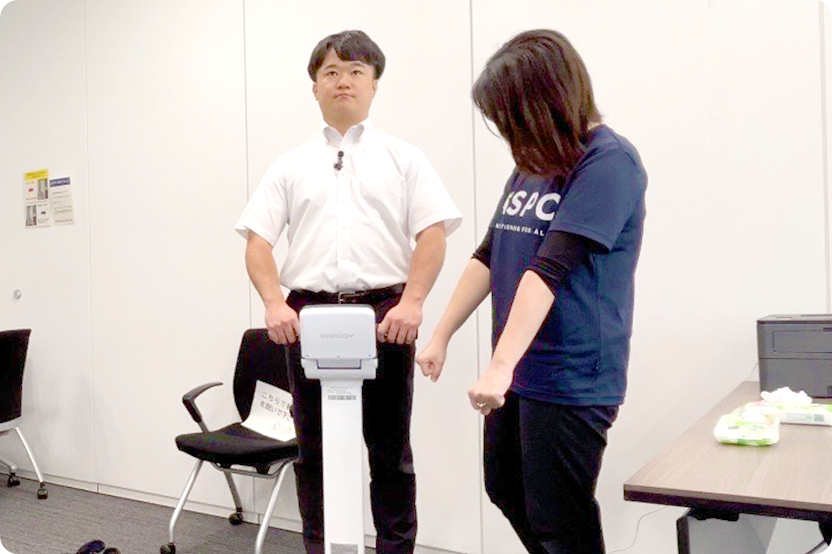
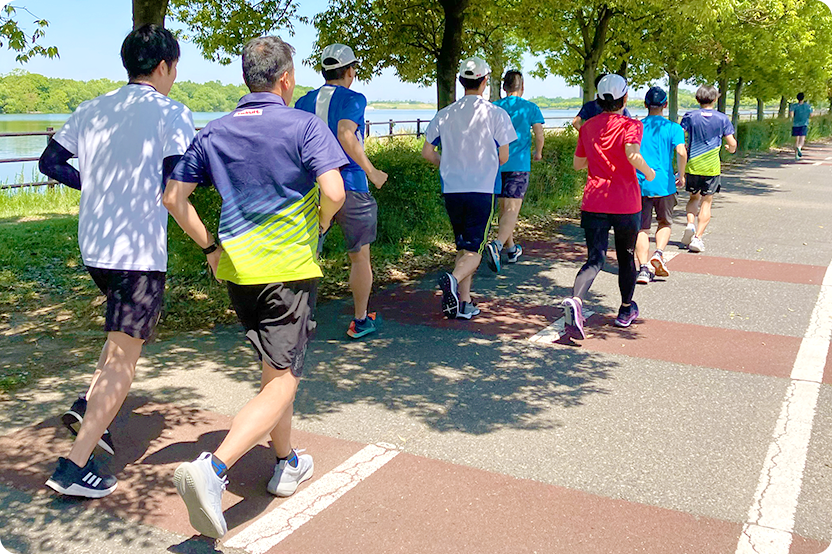
| Lifestyle Improvement Programs 1.In-house exercise program 2.Liver function seminar 3.Body composition measurement sessions 4.Running classes |
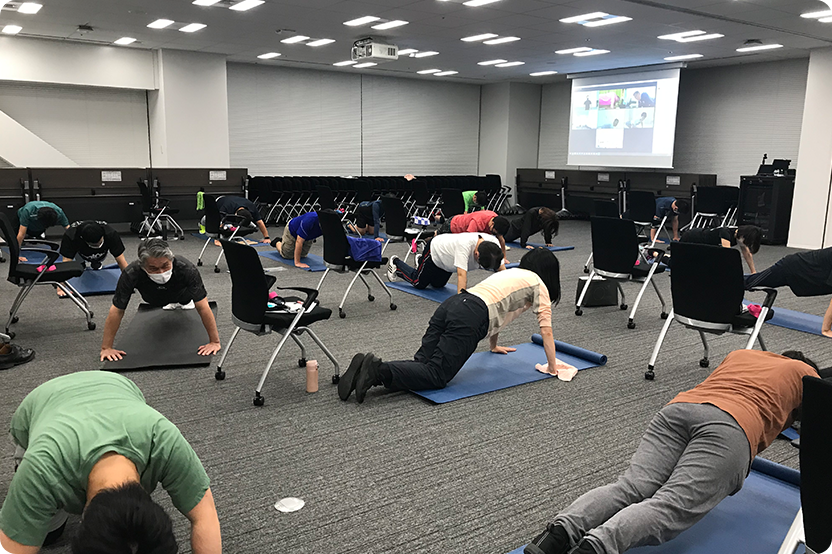
1.In-house exercise program (since FY2022) | These programs aim to improve lifestyle habits and reduce risk factors for illness. External specialists are invited to provide practical guidance on diet, exercise, and alcohol consumption, helping employees initiate positive behavioral changes.
|
560 employees (FY2025 total) |
| 2.Liver function seminar (since FY2023) | 170 employees (FY2023 total) | ||
| 3.Body composition measurement sessions (since FY2024) | 965 employees (FY2025 total) | ||
| 4.Running classes (since FY2024) | 20 employees (FY2024 total) | ||
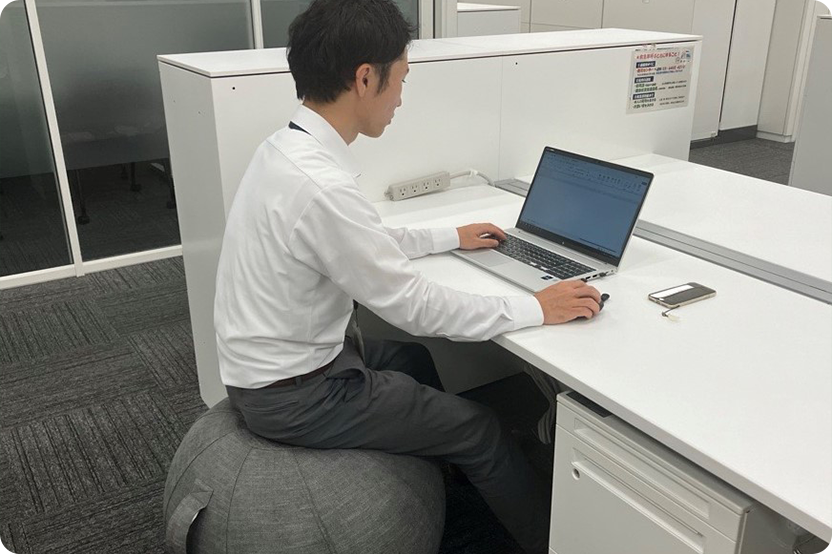
| Support for Employee Health Activities | 2023 | To support employee health, we have installed stretching equipment and other tools in the workplace, allowing employees to use them at any time.
|
― |
| Seminar on Balancing Work and Caregiving (Lecturer: Shiba District Community Comprehensive Support Center) |
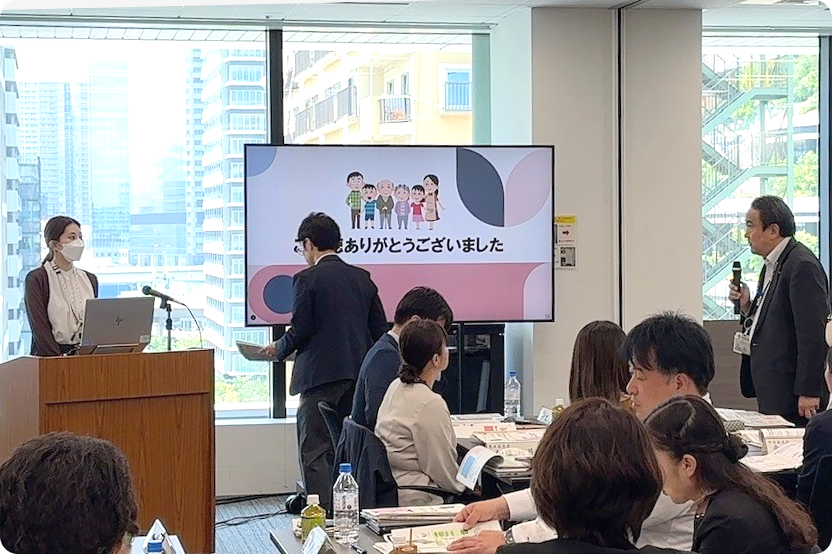
April 2025 | In collaboration with the Shiba Community Comprehensive Support Center, we provide seminars on how to utilize community support services and navigate caregiving resources. These sessions help employees deepen their understanding of balancing work and caregiving responsibilities.
|
40 employees (Participants share the content with their respective workplaces.) |



5.Promoting Childcare Leave for Male Employees
To deepen understanding of childcare within the company and to help employees enrich both their work and family lives, we actively encourage all employees to take childcare leave.
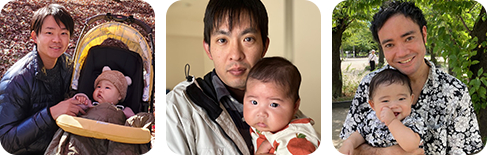
In recent years, more fathers have expressed values such as wanting to be fully engaged in both work and parenting, wanting to closely support and witness their child’s precious early development, wanting to support their partner after childbirth, and wanting to gain new perspectives by stepping away from work temporarily, perspectives that can ultimately benefit their future careers. As these values become more common, the number of male employees proactively taking childcare leave has been increasing.
Interviews with Male Employees Who Took Childcare Leave
6.Promoting Health Management Among Business Partners (Dealers and Distributors)
As a leading company in the field of health management, Yakult Honsha implements a wide range of health initiatives based on our corporate philosophy.
We work to extend health management practices to our business partners (dealers and distributors), contributing to “healthy and enjoyable lives” for even more people.
Health Management Seminars
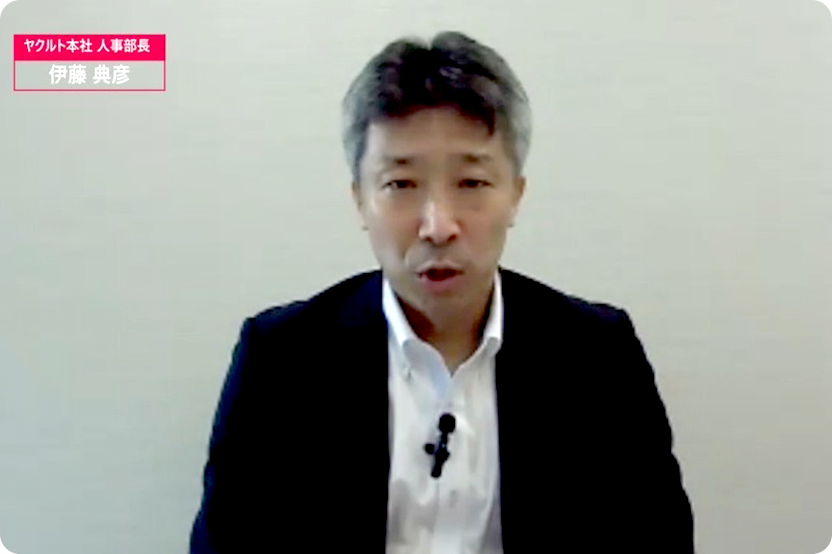
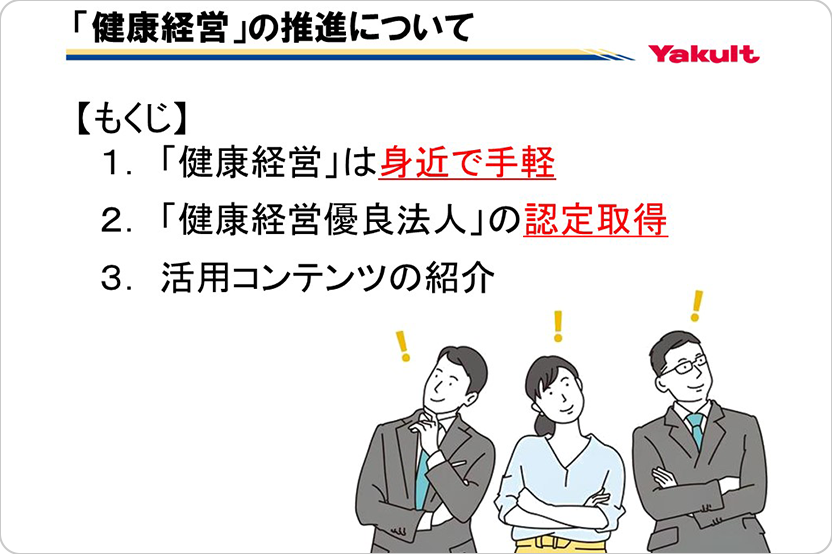
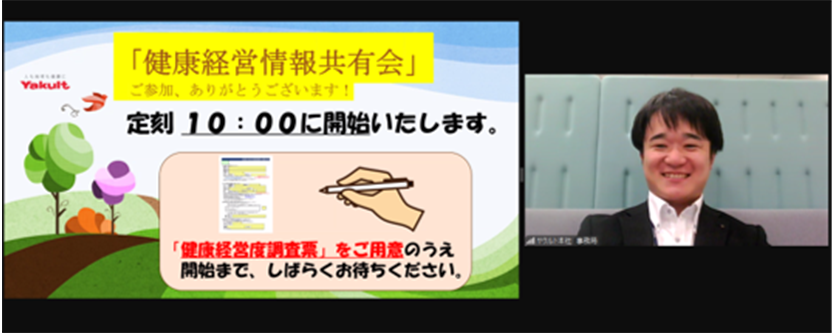
We conducted health management seminars for our business partners (dealers and distributors).
We shared the significance of health management, examples of initiatives, and practical know-how for addressing health-related challenges.
Health Management Information Exchange Meetings
We held study sessions and information-sharing meetings on health management for our business partners.
By exchanging good practices and discussing challenges related to promoting health management, we supported further advancement of health management initiatives.
7.Specific health initiatives
| Initiative | Target | FY2019 | FY2020 | FY2021 | FY2022 | FY2023 | FY2024 | ||
|---|---|---|---|---|---|---|---|---|---|
| Fiscal year | Value | ||||||||
| Regular health check participation rate | 2030 | 100% | 100% | 100% | 100% | 100% | 100% | 100% | |
| Follow-up check participation rate | 100% | 98.6% | 96.3% | 100% | 100% | 100% | 100% | ||
| Share within normal weight range (BMI18.5~25.0) |
70.0% | 64.3% | 64.2% | 63.1% | 66.1% | 65.9% | 67.1% | ||
| Stress check participation rate | 100% | 95.1% | 94.0% | 94.9% | 93.7% | 94.1% | 96.2% | ||
| Share with high stress levels | 8.0% | 10.4% | 8.3% | 8.6% | 8.3% | 8.3% | 9.1% | ||
| Share taking online health course |
100% | - | 85.6% | 87.6% | 95.8% | 96.6% | 96.4% | ||
| Online health course satisfaction rate | 100% | - | - | 98.0% | 97.6% | 97.2% | 96.2% | ||
| Smoking rate | 15.0% | 24.7% | 22.4% | 20.7% | 18.7% | 18.1% | 18.1% | ||
| Share exercising regularly (over 30 minutes, twice or more per week) |
30.0% | 27.4% | 27.0% | 28.5% | 28.7% | 27.9% | 29.6% | ||
| Completion rate for Yakult Health 21, 90-day exercise course (walking, warm-up calisthenics)*1 |
100% | 91.3% | 95.7% | 95.8% | 94.5% | 97.7% | 94.7% | ||
| Treatment retention rate for high-risk personnel | - | 31.5% | 31.6% | 33.0% | 34.9% | 38.4% | 48.0% | ||
| Specific Health Guidance Implementation Rate | 100% | 75.7% | 89.8% | 77.4% | 88.9% | 88.4% | 78.2% | ||
| Average years of employment | - | 18.3years | 18.4years | 18.8years | 17.4years | 16.6years | 16.1years | ||
| Average monthly overtime | - | 10.7hours | 8.1hours | 9.0hours | 10.3hours | 11.0hours | 10.6hours | ||
| Annual paid leave utilization rate | - | 76.9% | 71.7% | 76.5% | 81.6% | 88.1% | 84.4% | ||
| Health Awareness (subjective health perception: proportion who consider themselves healthy) |
90.0% | 84.2% | 87.7% | 85.1% | 86.1% | 83.9% | 83.7% | ||
| Employees taking leave due to injury or illness | - | - | 28 | 31 | 29 | 19 | 22 | ||
| Absenteeism*2 (average sick-leave days used among all employees) |
1.5days | - | 1.6days | 1.9days | 2.1days | 1.3days | 1.2days | ||
| Presenteeism*3 (SPQ: Single-Item Presenteeism Question, University of Tokyo) |
10.0% | - | - | 18.6% | 13.2% | 13.0% | 14.2% | ||
| Work engagement*4 (Utrecht Work Engagement Scale - Short Version, converted to a 6‑point scale) |
Over4.0points | - | - | 3.8points | 3.9points | 3.9points | 3.8points | ||
| Employee satisfaction | 80% | - | - | - | - | 78.3% | 77.8% | ||
| Cancer screening participation rate for women | Breast cancer | 90.0% | 65.7% | 69.5% | 75.1% | 81.4% | 89.0% | 90.4% | |
| Cervical cancer | 80.0% | 55.0% | 59.5% | 59.8% | 67.7% | 78.8% | 78.5% | ||
| Share of male employees taking childcare leave | Full participation | 19.6% | 15.9% | 86.4% | 95.0% | 95.0% | 107.1% | ||
- *1 Share of participants who completed the course.
- *2 Absence from work due to mental or physical health issues.
- *3 Presenteeism refers to reduced performance despite being at work due to mental or physical health issues.
- *4 Work engagement refers to a positive and fulfilling psychological state toward one’s work.
The number of respondents/response rates are: *2: 2,591 employees / 100% (FY2024); *3 and *4: 2,825 employees / 95% (FY2024) - *5 This indicator represents the ratio of full-time employees who took childcare leave for the first time during the fiscal year (B) to those who had a child during the same fiscal year (A). Because it includes employees whose child was born in a previous year but who took leave for the first time in the current year, the rate may exceed 100%.
Employee health consciousness has increased as a result of the above initiatives. “I went for a follow-up check, which led to early detection of an illness,” a woman in her forties commented. And a man in his thirties said, “I took the 90-day exercise course and now walk the length of one station.”
- Home
- /
- Sustainability
- /
- Social
- /
- Health-focused management
